The Radio Project
From Prototype to Platform
How two licensed HAM operators built emergency radio kits from scratch — and how that hands-on experience became the foundation for beprepared.ai.
We Didn’t Just Study Preparedness. We Built It.
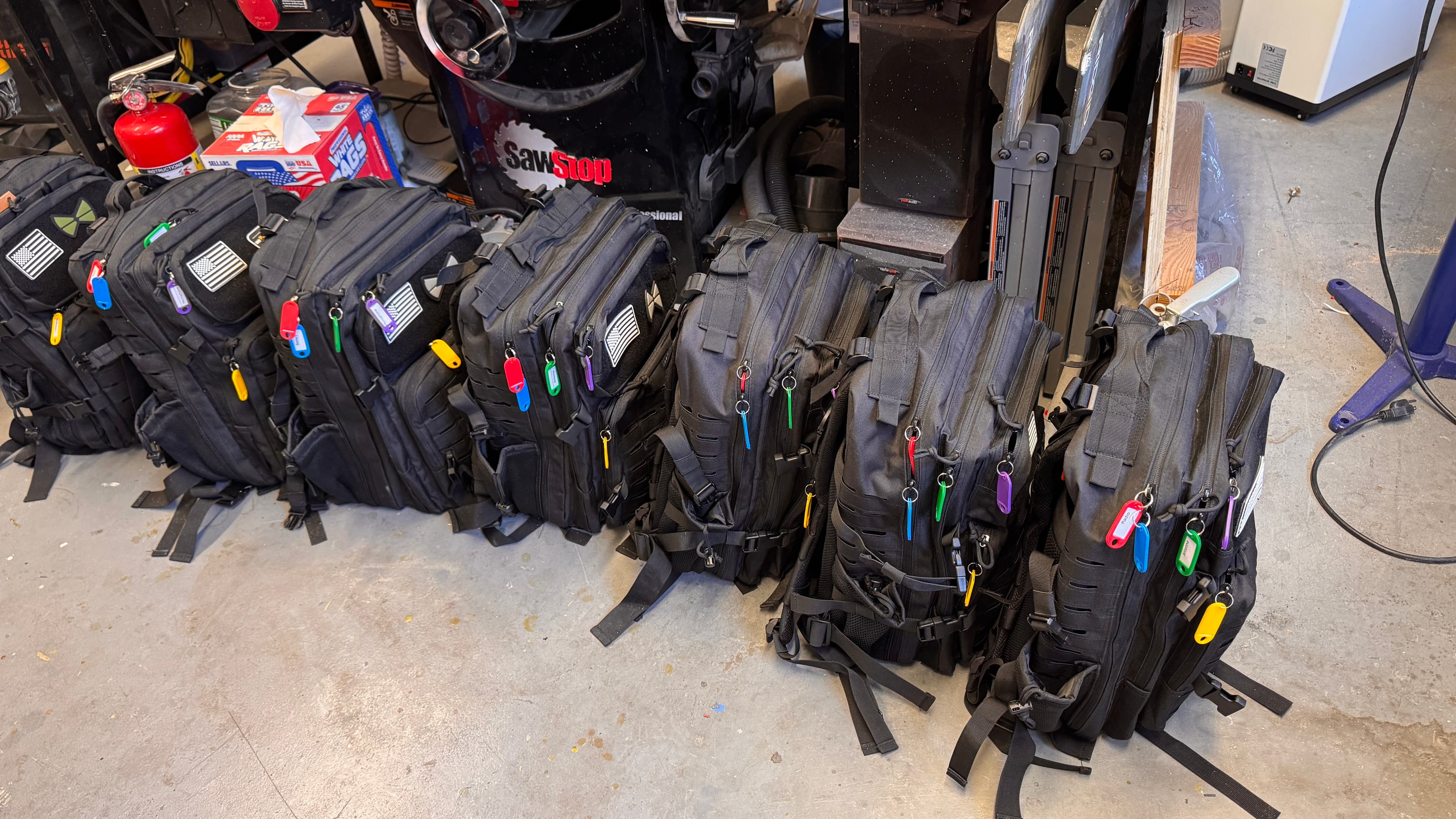
Before we wrote a single line of code for beprepared.ai, we spent over a year designing, engineering, and field-testing emergency communication systems. Both of us earned our FCC amateur radio licenses — not because it was a hobby, but because we needed to understand emergency communications from first principles. The result was seven complete base station kits built for the people we love.
Licensed HAM Operators
HF / VHF / UHF
Digital Modes
GMRS Certified
3D Printing
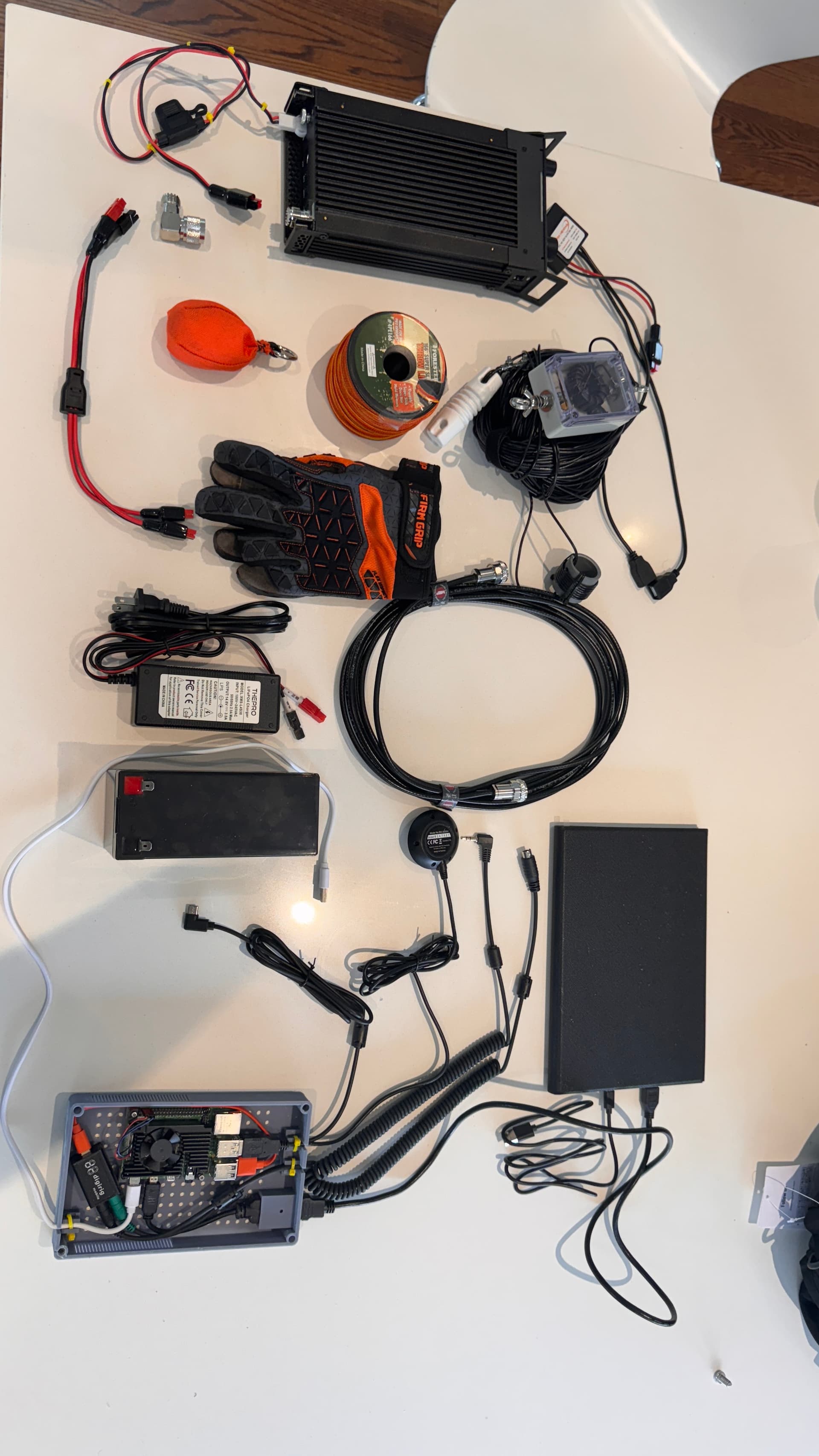
The first prototype: a Raspberry Pi, a 10Ah battery, a GPS module, and a Xiegu G90 HF radio. We started with a question nobody had a good answer to.
1
The SparkA Simple Question Nobody Could Answer
When cell towers go dark — during a hurricane, a grid failure, an — how do you reach your family? We searched for a turnkey solution that a non-technical person could grab and go. Nothing existed. So we started building one ourselves, beginning with a Raspberry Pi, a small battery, and an amateur radio. The early version used a video output to interface with the Pi and ran custom software to convert GPS coordinates into Maidenhead grid locator strings for digital transmission.
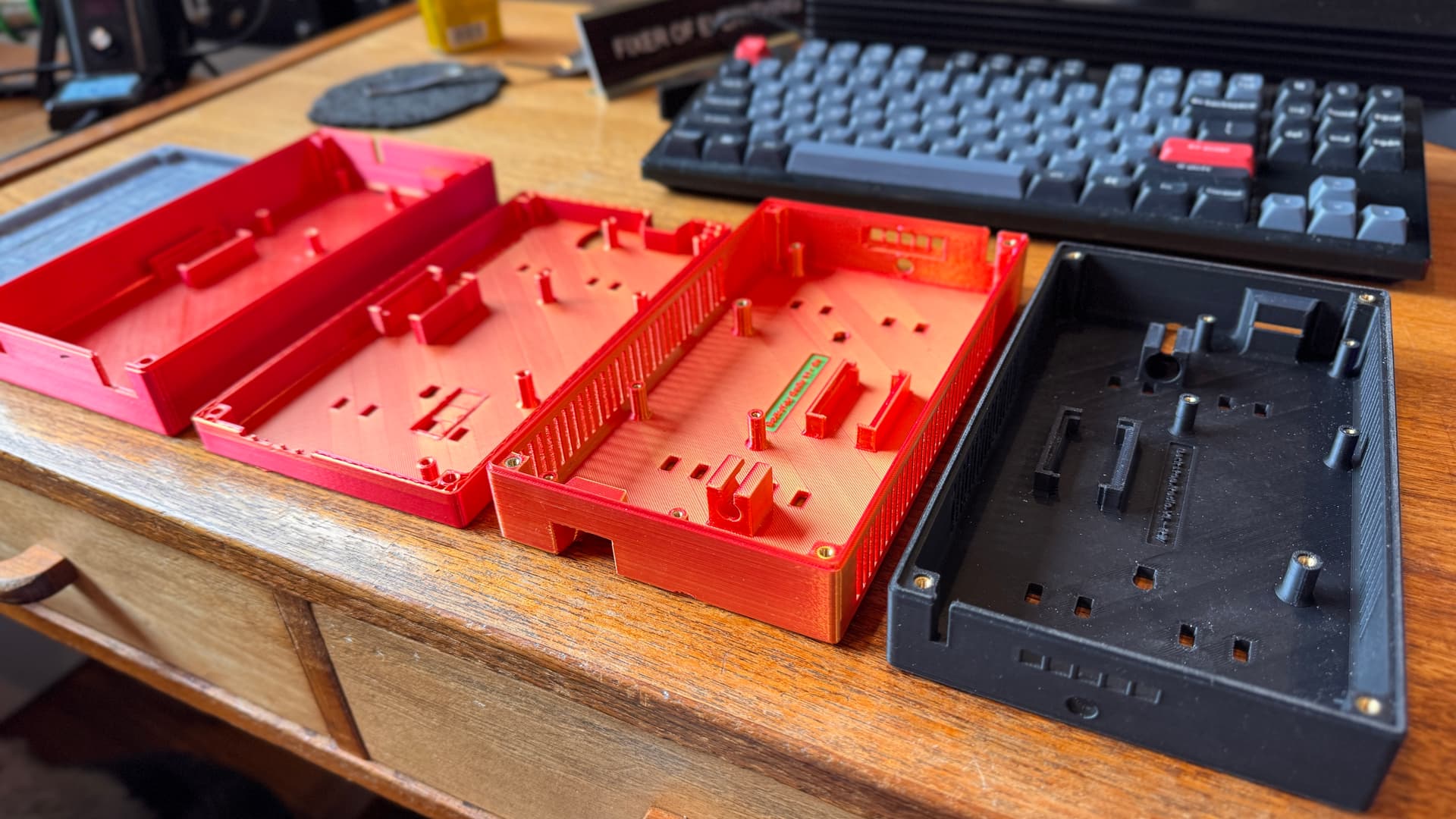
More than 30 enclosure iterations. Each 8-hour print taught us something new about cable management, airflow, and durability.
2
The IterationThirty Designs Before Getting It Right
Our first enclosure was a $110 off-the-shelf waterproof project box. It worked, but it was expensive and clunky. We invested in a 3D printer and taught ourselves Fusion 360 CAD/CAM to design our own. The first custom print had walls that were too thin and sharp edges. The second improved wire management and added ventilation. By the thirtieth iteration, we had a rugged, purpose-built enclosure that cost $20 in materials and looked professional. Each print took 8-10 hours — and every failure taught us something essential about product design.
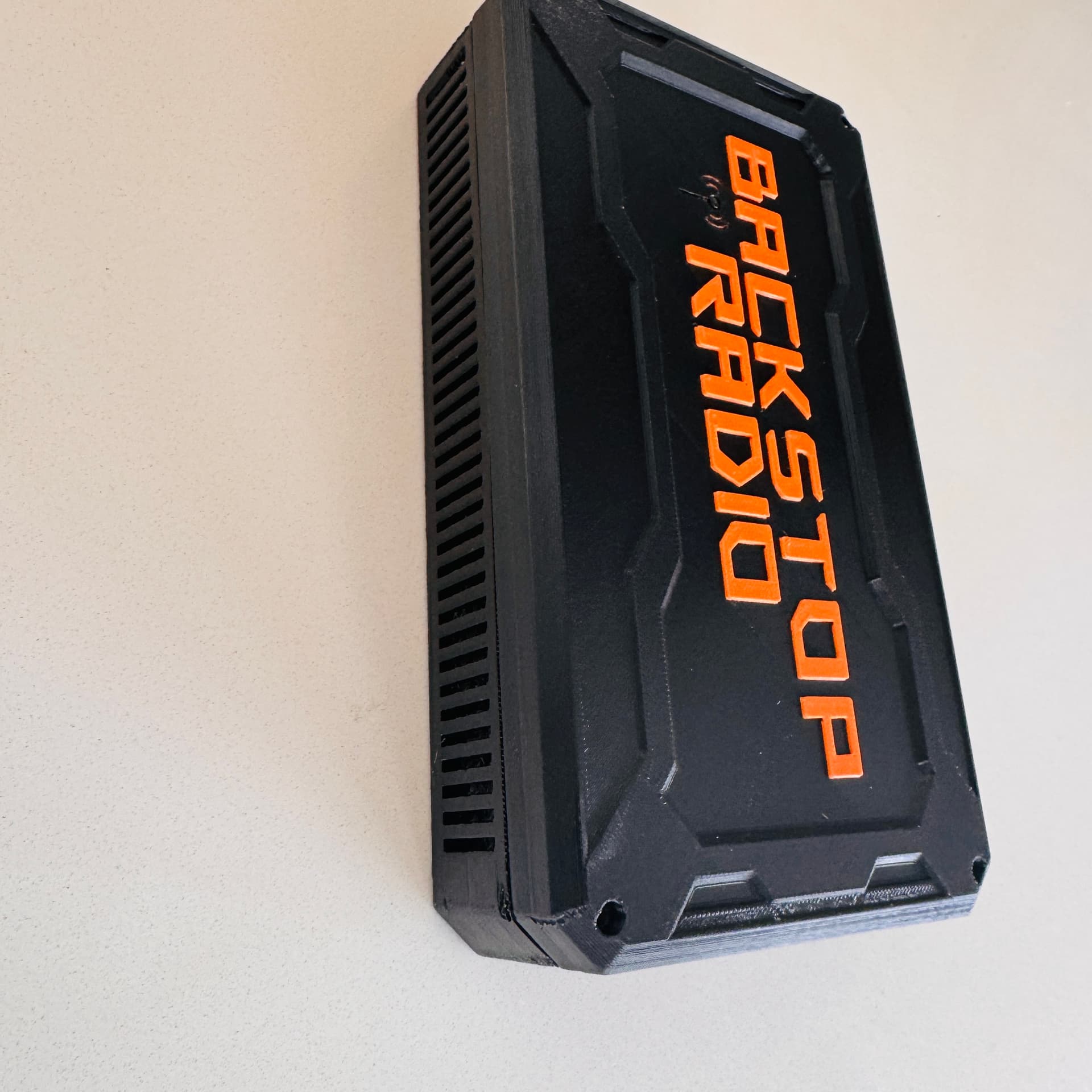
The final design: thicker walls, proper ventilation, clean cable routing, and a rugged field-ready look.
3
The EngineeringCustom-Built for Real Emergencies
Every engineering decision was made through the lens of a real emergency. We upgraded from a 10Ah battery to 30Ah for multi-day operation. We added a UPS controller that automatically switches between AC power and battery. We integrated a master on/off switch, charge status indicator, and solar charging capability. We removed unnecessary features like the TFT display that added complexity without field value. The result was a system designed not for hobbyists, but for families who need reliable communication when everything else fails.
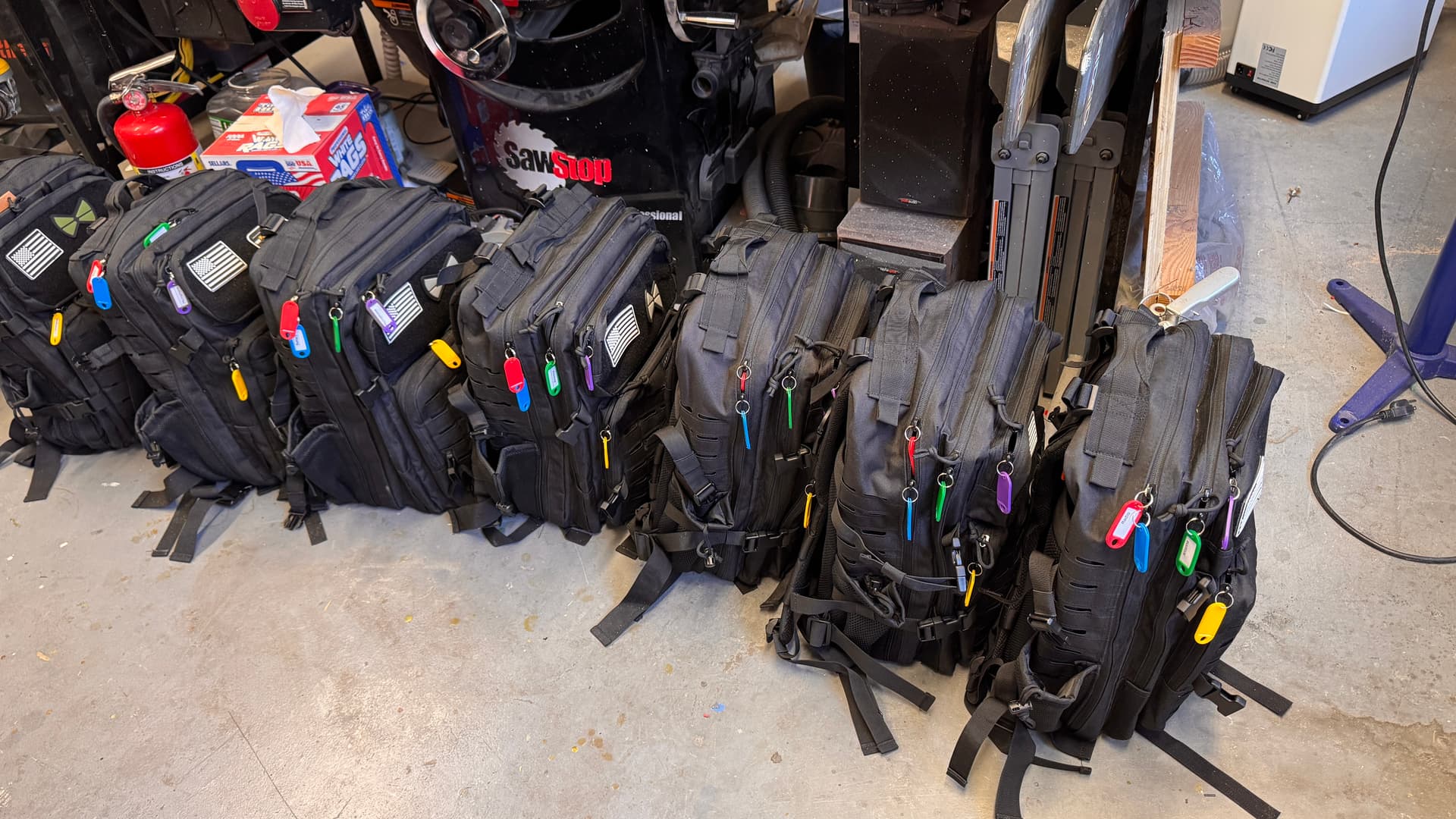
Seven complete base station kits — each containing a radio, computer, 110-foot antenna, 30Ah battery, solar panel, and everything needed to get on the air.
4
The AchievementSeven Complete Kits for the People We Love
We built seven complete base station kits for our friends and family. Each kit contains a configured HF radio, a Raspberry Pi control computer with pre-loaded digital mode software, a 110-foot end-fed calibrated antenna, a 30Ah rechargeable battery with power management, a solar panel, and all necessary cables and accessories. Every radio was pre-programmed with emergency frequencies, NOAA weather channels, and digital communication modes. Colorful tags identify each compartment. The entire system is grab-and-go.
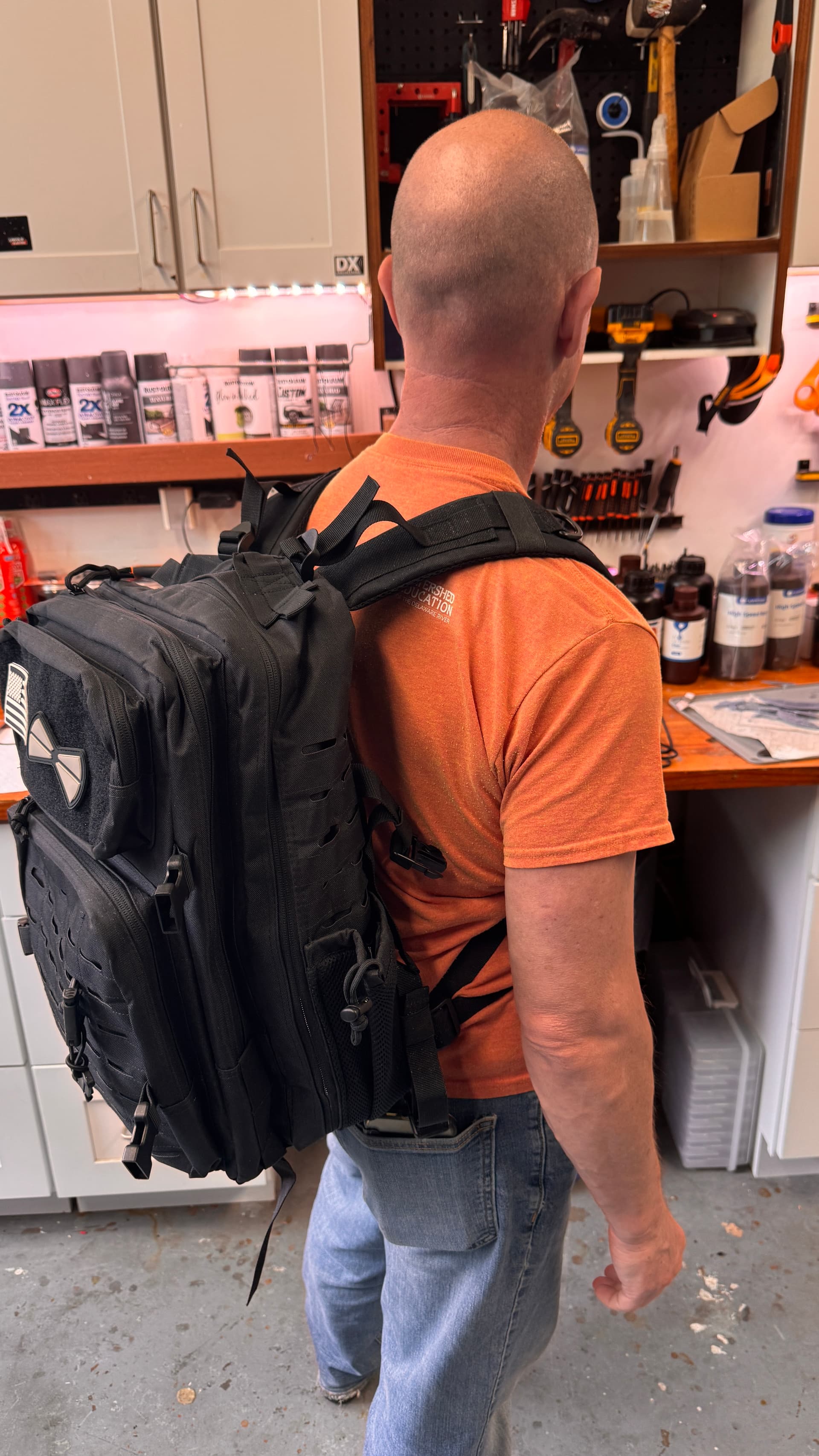
Field testing the complete kit — approximately 30 pounds of communication capability that one person can carry anywhere.
5
The Field TestCarried on Our Backs, Tested in the Real World
We took our kits to local parks and open areas for real-world field testing. At roughly 30 pounds, the kit is portable enough for one person to carry. We tested HF propagation across multiple bands from 75 meters to 30 meters, validated the solar charging system, and confirmed that a complete novice could follow our laminated quick-start guides to get on the air. The kits performed exactly as designed — reliable, deployable, and genuinely usable by someone who has never touched a radio before.
Skills Forged by Necessity
Building these kits from scratch demanded expertise we had to earn the hard way. Every skill we developed feeds directly into how we evaluate and recommend solutions on beprepared.ai.
CAD & Manufacturing
Mastered Fusion 360 for 3D modeling and CAM — designing for aesthetics and manufacturing are completely different disciplines.
RF Engineering
Learned radio frequency fundamentals, antenna design, propagation characteristics, and how terrain and weather affect signal quality.
Embedded Systems
Built custom software in Python and Node.js, designed Linux services, and even created an API wrapper for a 15-year-old Fortran-based program.
Power Systems
Engineered power management with UPS controllers, BMS integration, solar charging, and automatic failover between AC and battery.
From Radio Kits to AI-Powered Preparedness
The radio project taught us something that no amount of reading could: real preparedness is about systems, not individual products. A radio is useless without an antenna, a power source, the knowledge to operate it, and a plan for who to contact.
That systems-level thinking is exactly what powers beprepared.ai. When our AI builds your emergency plan, it considers every dependency — water needs cooking fuel, shelter needs lighting, communication needs power. The same relentless attention to detail that went into making sure every cable, connector, and frequency was right in our radio kits now ensures your preparedness plan has no gaps.
We don’t recommend products we haven’t tested. We don’t suggest plans we haven’t tried ourselves. This project is proof of that commitment.
Built by People Who Actually Do This
The same hands that soldered circuits and calibrated antennas built the platform that creates your personalized emergency plan.